
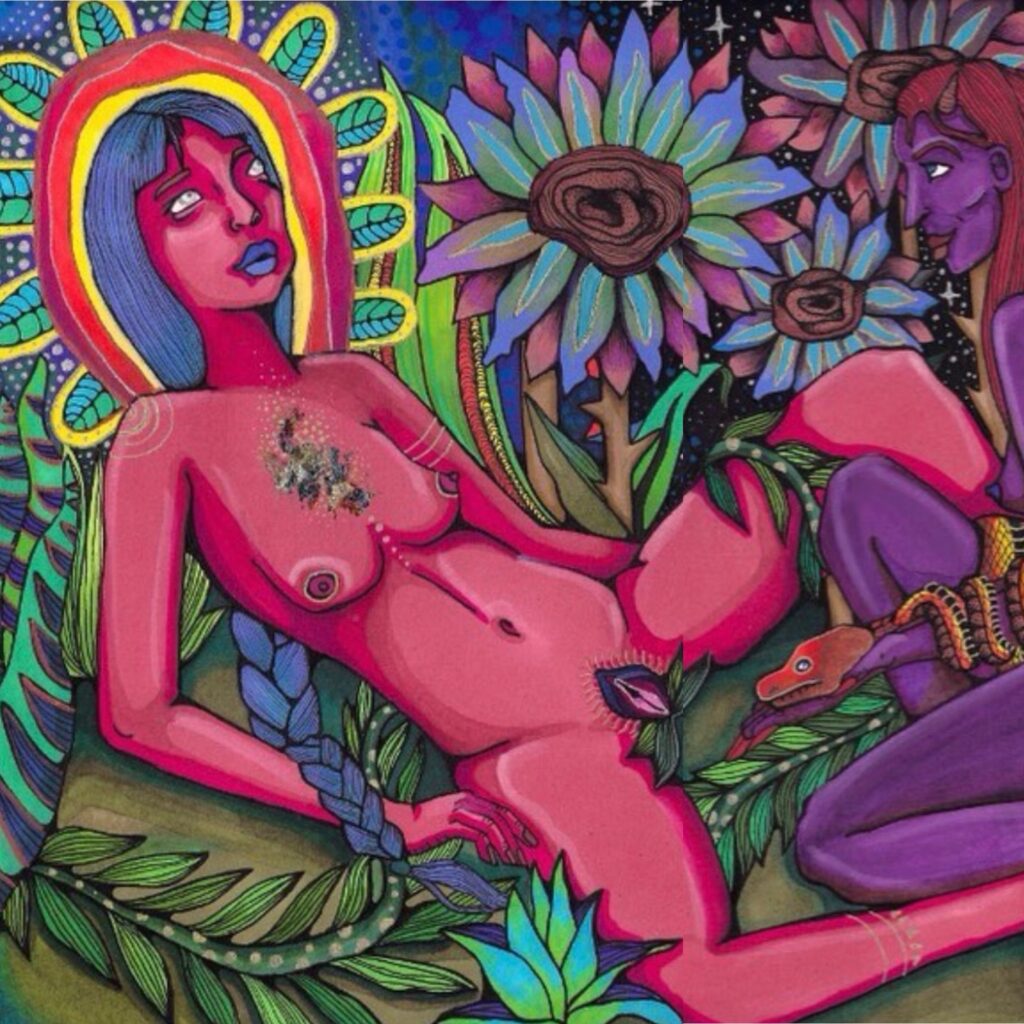
Art by: Gaia Weber @lizard.palace
Sexuality is the way in which each person expresses their desires, thoughts, fantasies, attitudes, hands-on experiences, and interpersonal relationships. It is shaped by a combination of biological, socioeconomic, cultural, religious, and spiritual factors. Because there are so many expressions of sexuality, it becomes a complex term—difficult to define in absolute terms.
I believe both biological and social factors play a role in the formation of sexuality. The dogmatic roots embedded in human consciousness have a strong influence on the nature of sexual development. While I agree with the idea of a biological drive for sex—as Maslow outlines in his hierarchy of needs—I see the social and cultural context as the key determinant in how each person defines and experiences their own sexuality.
At a societal level, sexuality proves to be fluid and adaptable. The existence of the sexual urge is as old as humanity itself, but what has truly distinguished each generation is society’s evolving perspective and level of acceptance around sex and sexuality. These shifting attitudes have redefined the meanings and behaviors associated with sexuality over time.
In this sense, I align with Jeffrey Weeks’s social constructionist view: “Sexuality is a highly social phenomenon, and as society changes, so must sexuality.” There is no universal definition of sexuality—only individual experiences shaped by broader social forces. It’s a bit ironic, but understandable: something so personal is also deeply collective.